Intervista a Oded Rahav, fondatore dei Dead Sea Guardians: una missione per il futuro
Oded Rahav ha fondato i Dead Sea Guardians, i Guardiani del Mar Morto, un’associazione per difenderlo. L'intervista
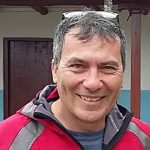
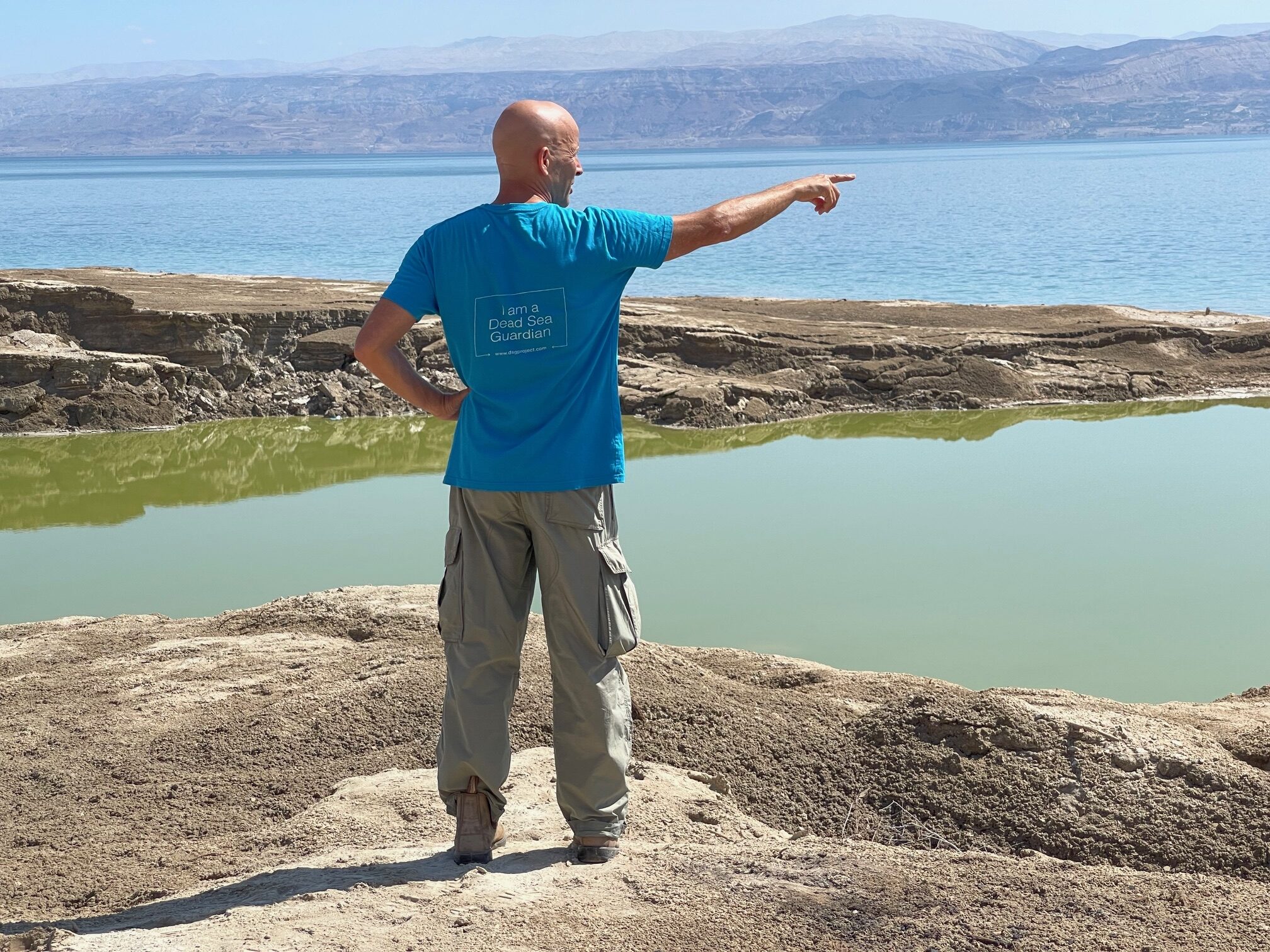


Oded Rahav ha fondato i Dead Sea Guardians, i Guardiani del Mar Morto, un’associazione per difenderlo. L'intervista
English translation below
“Se vuoi capire le cause del passato, guarda i risultati che si manifestano nel presente. E se vuoi capire quali risultati si manifesteranno nel futuro, guarda le cause poste nel presente”
Nichiren Daishonin (1222-1282)
Alle volte il presente ti lascia così senza fiato che ci sono solo due strade percorribili. Annegare nella recriminazione oppure gettare il cuore oltre, ma molto oltre e aprire lo sguardo al futuro, anzi costruirlo attraverso questo sguardo. Le azioni che possono scaturire da una tale decisione possono sembrare ai più scelte pazze o, peggio, indifferenti alle durezze del presente.
Chi ad esempio oggi, di fronte alle tragedie contemporanee, metterebbe in campo un’azione a favore dell’ambiente in Israele o in Palestina, in Ucraina o in Russia o in qualunque altro luogo del mondo dove mille guerre piccole o grandi si combattono? E quanti Soloni si alzerebbero a chiedere: si ma tu oggi da che parte stai? Di qua o di là? Guelfi o i Ghibellini? Capuleti o Montecchi? Con noi o contro di noi?.
Di questi pazzi che guardano al futuro e seminano perché il raccolto sia tra 5, 10, 50 anni e più c’è il mio amico Oded Rahav. Ci siamo conosciuti in Nepal nel 1999 durante un trekking sull’Himalaya che stavo facendo là con il mio amico di sempre Gabriele, mentre Oded era in viaggio di nozze con sua moglie Shira.
Oded è nato e vive in Israele. Ama la natura, le persone, la musica. Alcuni anni fa ha fondato un gruppo di visionari che inizialmente hanno iniziato a nuotare in lungo e in largo nei mari del mondo per manifestare in difesa del mare. Poi ha deciso di nuotare attraverso un mare che in realtà un mare non è, ma che condensa su di sé ogni significato che racconta il presente. Si chiama Mar Morto ed è il lago salato senza emissario che raccoglie le acque del fiume Giordano quando esse giungono nella fossa tettonica più profonda della terra emersa, alla quota di -430 m sotto il livello del mare.
Una perla geologica che ospita acque ipersaline ed un ambiente unico sulla terra. Le sue rive toccano Israele, Palestina e Giordania. Le acque che lo alimentano provengono anche da Siria e Libano. Solo a dirli i nomi di questi paesi si pensa alla guerra e alle divisioni che solo noi esseri umani siamo capaci di inventare.
Una cartina politica spezzatino, che invece, se guardata solo per la sua componente di geografia fisica non vede alcuna di queste divisioni. Ma non è solo questo. In un ambiente largamente arido e povero di risorse naturali, il Mar Morto è oggi minacciato dal prelievo di acque lungo il fiume Giordano e dall’industria mineraria per l’estrazione dei preziosi minerali evaporitici che si formano in quella depressione. Il livello si abbassa al tasso di un metro all’anno e se non si dovesse invertire questa tendenza il destino di questo Mare sarebbe davvero quello di morire e con esso un ambiente e una biodiversità unici.
Oded non ha perso tempo e ha fondato i Dead Sea Guardians, i Guardiani del Mar Morto, un’associazione per difenderlo. Prima del 7 ottobre 2023 lavoravano insieme attivisti israeliani, palestinesi e giordani. Poi è diventato tutto più difficile. Oded non ha però smesso di sognare e anzi, proprio di fronte al terribile presente, ha maturato la determinazione di fare della battaglia per la difesa del Mar Morto una missione.
Perché mentre le guerre e le divisioni degli uomini un giorno finiranno, l’ambiente che ci offre la nostra amata Madre Terra continua e continuerà, e forse sarebbe un grande bene se, dopo un sonno di cento anni come nella favola della bella addormentata nel bosco, ci si potesse risvegliare tutti uniti a prendersi cura di Lei. Ma questa non è una favola e dunque servono le persone come Oded che non rispondono alla domanda “Capuleti o Montecchi?”, ma costruiscono il futuro in cui torneremo a convivere e a lavorare insieme.
Oded, ti andrebbe di raccontarci come sono nati i Guardiani del Mar Morto?
Ho fondato l’organizzazione dei Guardiani del Mar Morto subito dopo aver capito che non c’è nessuno che in realtà si sveglia la mattina e si concentra solo su questo. Come attivista cresci imparando che se nessuno si assume la responsabilità, la probabilità che un’idea si materializzi è bassa. E quando si tratta di affrontare i problemi legati alla natura le cose peggiorano ulteriormente. Noi esseri umani preserviamo la natura come un’entità data e auto-organizzata. Beh, una volta era così, ma non più. Ora la natura dipende dal comportamento umano. Una volta capito questo, mi sono schierato dalla parte della natura. Comprendo perfettamente la relazione e l’interazione con Madre Natura. Una volta capito, ho affrontato gli aspetti tecnici della strutturazione di un’organizzazione no-profit e pochi giorni dopo avevo già un team e un sito web. Poche settimane dopo avevamo molti volontari da ogni parte. Erano affascinati dalla sola idea di salvare questo mare e volevano prendere parte a questo atto megalomane e grandioso. Poiché non esiste il manuale “come salvare un mare, volume 1” ho dovuto inventarlo. Così facendo mi metto sulle spalle dei giganti. Ho riunito professionisti, letto articoli, leggi e ho appreso di precedenti e casi simili. Ho approfondito la complessità, sia tecnica che geopolitica, e gli aspetti tecnici di come possiamo apportare un cambiamento. Ma il fattore più importante è stato trovare persone ottimiste che possano immaginare la soluzione e il futuro migliore che porta con sé. Questa è la chiave.
Quali sono le opzioni scientifiche e tecniche per salvare il Mar Morto?
Il problema è tutto lì: c’è meno acqua che entra e più acqua che se ne va. Il fiume Giordano e i suoi affluenti sono stati arginati per uso potabile e agricolo. Ma ora desalinizziamo e trattiamo l’acqua in modo da poterne rilasciare di più alla natura. Inoltre, le saline del Mar Morto, sia israeliane che giordane, estraggono minerali e in questo processo utilizzano un’enorme quantità di acqua. A ciò si aggiunge che in estate in questo luogo si possono raggiungere i 50 gradi centigradi e l’evaporazione è immensa.
Il nostro obiettivo è garantire che Israele rilasci più acqua lungo il fiume Giordano e che le fabbriche passino a un modo sostenibile di utilizzare le acque e ne usino meno. Parallelamente, dobbiamo assicurarci che siano parte della soluzione complessiva. Inoltre, promuovere la creazione di impianti per il trattamento dell’acqua in Giordania e nei territori di Palestina. Vorremmo anche assicurarci che vengano adottate le migliori pratiche e tecnologie. Questa è una vittoria per tutti. Una cosa: l’acqua del mare è salina al 36% e quindi dobbiamo assicurarci che qualunque cosa facciamo, lo facciamo correttamente e con la massima sensibilità nei confronti della natura.
Anche il Mar Morto soffre di negazionismo così come soffre il cambiamento climatico? Quanto è difficile ottenere consenso da parte dell’opinione pubblica e dei politici su questo tema?
Il Mare soffre soprattutto di indifferenza. L’indifferenza è una delle malattie umane. Quando le persone tengono un occhio, è lì che le cose vanno male ed è lì che il “business as usual” può continuare. Esiste un termine: “la sindrome della linea di base mobile”. Gli esseri umani si abituano troppo velocemente e troppo facilmente al deterioramento delle condizioni e persino alle atrocità. È lì che noi e la natura perdiamo. Nel nostro caso è negligenza, ignoranza e il pensiero che qualcun altro lo aggiusterà per noi. Io, per tutta la mia vita, so che non c’è nessun altro oltre a me. Noi. Possiamo e dobbiamo assumerci la responsabilità.
E sì, è difficile sensibilizzare l’opinione pubblica nei confronti della natura, soprattutto adesso, soprattutto nella nostra martoriata regione. Ma rimango fermo e mi concentro perché vedo il futuro e non il passato. Ecco perché ho scelto di essere creativo e invito tutte le persone creative a unirsi. Credo che l’arte, lo sport, il benessere, la scienza e gli affari siano fondamentali per coinvolgere le persone e metterle al tavolo. E il vantaggio del Mar Morto è che c’è un consenso totale sulla sua questione. Nessuno vuole vederlo sparire. Una volta che avremo un milione di persone che vorranno vederlo prosperare, i politici agiranno più velocemente e in modo più efficiente.
Qual è la tua visione tra 20 anni?
Tra 20 anni vedremo un Mare stabilizzato, con angoli attraenti dove le persone potranno godere della magia di questo luogo. Possono avere i loro luoghi per i ritiri, possono fare escursioni e nuotare o semplicemente rimanere in silenzio e in soggezione guardando questo luogo maestoso. Gli studenti verranno qui per fare le loro ricerche su storia, geologia, fede, ecologia, relazioni internazionali, diplomazia dell’acqua, agricoltura nel deserto e guarigione. Il posto prospererà perché ci importava. Abbiamo mostrato amore e compassione, e la natura lo sente e restituisce ancora di più.
Potresti raccontarci una bella storia accaduta durante la tua impresa?
Ce ne sono così tante. Dopotutto, siamo in un luogo biblico, l’origine della narrazione. Una volta avevo una troupe televisiva di Montreal, in Canada. Erano venuti per filmare questo posto dopo un tour mondiale in luoghi che sono stati colpiti e danneggiati dall’uomo. Ci siamo incontrati al livello del mare. Mi hanno detto che avevano 2-3 ore per il colloquio. Ho chiesto loro di togliersi l’orologio, poiché nel Mar Morto non esiste né fuso orario né limiti di tempo. Ha un tempo e uno spazio propri. E così fecero. Alla fine siamo rimasti molte ore e loro sono stati esposti a siti ed esperienze affascinanti, ma ciò che li ha affascinati di più è il fatto che nella loro mente pensavano di filmare un luogo distrutto, pieno di pessimismo e disperazione, ma io ho parlato solo di ottimismo e del fatto che insieme lo stiamo aggiustando, mentre parliamo. Un completo cambio di mentalità. Hanno capito che in realtà si trovano nel luogo più curativo del pianeta: il 6% in più di ossigeno, il 14% in meno di radiazione solare, la più alta percentuale di minerali, e pace e basta. Quella è stata un’esperienza che gli ha cambiato la vita.
Ti senti solo nella tua missione o hai degli amici. Quanto è importante avere il sostegno internazionale?
I pastori sono soli. Non importa quante persone lavorano con te, per te, ti consigliano, alla fine sei tu che prendi dei rischi. Ma è qualcosa di più profondo del semplice rischio tecnico. Hai una visione. Lo vedi vividamente e ora spetta a te condividere la visione con gli altri. È come i profeti: non hanno detto cosa c’è nel futuro, ma piuttosto hanno cristallizzato la visione del presente, che riflettiamo nel futuro. Ho amici e colleghi che si fidano di me e mi seguono. I nostri primi donatori, la Fondazione Aviv, sono stati così generosi da dire: “sapete come salvare un mare. Noi no. Confidiamo e crediamo in te e vogliamo aiutarti a realizzarlo. Per il bene delle generazioni a venire e per Madre Natura”. Gli amici e il sostegno internazionale sono cruciali. Questo mare è una delle meraviglie del pianeta. Si trova nella Grande Rift, tra Mozambico e Turchia. È un’ancora di salvezza per gli uccelli e trilioni di creature. Il fiume Giordano è sacro per più della metà della popolazione di questo pianeta. Abbiamo bisogno di persone che amplificano questo messaggio, producono effetti e ci aiutano a mantenere la nostra attività come massima priorità. Il finanziamento ci aiuta nelle nostre azioni e nella nostra difesa.
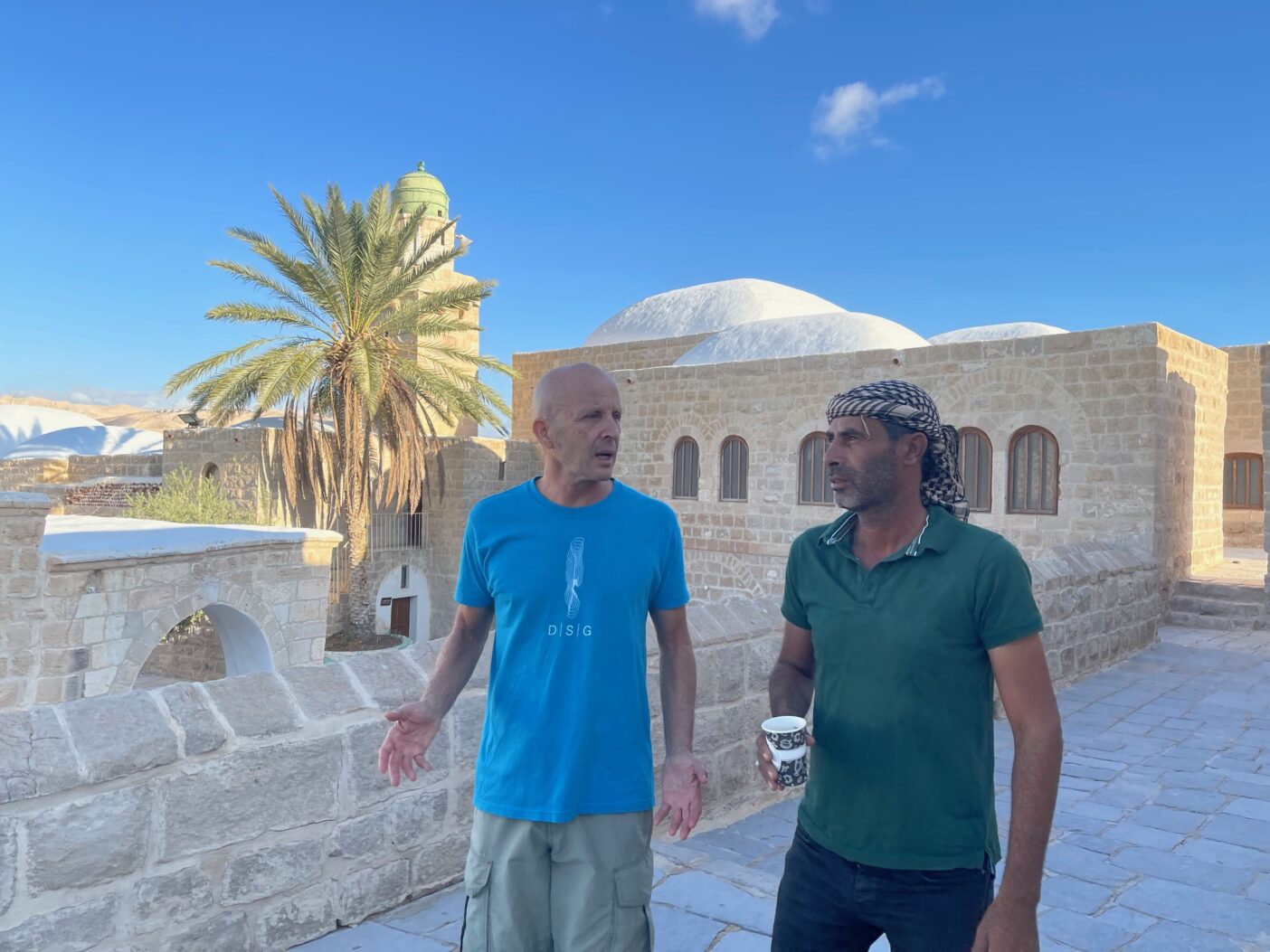
Non ti chiederò del presente, ma pensi davvero che la campagna dei Guardiani del Mar Morto possa cambiare il futuro non solo del Mar stesso ma anche delle comunità umane che vivono intorno al Mar Morto e dovrebbero prendersene cura?
Ne sono fiducioso al 100%, altrimenti non mi sarei imbarcato in questa ambiziosa missione. Questa missione megalomane e grandiosa insegnerà a noi umani come restituire alla natura e perché ne vale la pena. Impareremo una lingua antica che una volta conoscevamo. Il mio obiettivo è semplicemente quello di rinfrescare la nostra memoria e il nostro rapporto con la Madre Terra e noi stessi, e mentre lo facciamo faremo un viaggio significativo. Persone da ogni parte aspettano di sentire una bella storia “C’erano una volta, in una terra lontana, queste persone che difesero il mare, lo attraversarono a nuoto e così facendo lo salvarono!”. Le persone desiderano una bella storia con un lieto fine. La mia vocazione nella vita è fornirlo, e nel modo più divertente possibile.
Il mio obiettivo, man mano che avanzo, è creare alleanze tra i fiumi. Fiumi gemelli. Immaginate che il fiume Po firmi un trattato con il fiume Giordano. Non sono le persone a firmare. I fiumi! Loro lo sanno meglio. E poi firmano con il Nilo, il Gange, lo Yangtze, il Mekong, l’Amazzonia, il Colorado, il Volga, il Niger, il Congo, l’Indo e così via. Riesci a immaginarlo? Io posso. È semplice.
Un’ultima chiamata. Potresti dire ai nostri lettori cosa leggere, guardare e come supportare i Guardiani del Mar Morto?”
Il modo per sostenere è accedere al sito web, aggiungere il proprio nome, donare, avviare/ospitare un evento, avviare ricerche e lavori cartacei su questo luogo, scrivere articoli sul Mar Morto (a proposito, in ebraico lo chiamiamo Yam HaMelach, che significa- Il mare salato. Furono i romani a chiamarlo Morto). Siamo nel bel mezzo della creazione del capitolo Friends of the Dead Sea, Italia. Cerchiamo persone che vogliano partecipare e condurre questa iniziativa con noi. Posso promettere una cosa: chiunque si unirà vivrà un’esperienza nuova ed edificante. Dopotutto, dal punto più basso del pianeta puoi solo salire. Non è solo una metafora. È tutta una filosofia e uno stile di vita.
ENGLISH VERSION
“If you want to understand the causes that existed in the past, look at the results as they are manifested in the present. And if you want to understand what results will be manifested in the future, look at the causes that exist in the present” Nichiren Daishonin (1222-1282)
Sometimes the present leaves you so breathless that there are only two ways forward. Drown in the recrimination of the past or throw your heart further, much further and open your gaze to the future, or rather build it through this gaze. The actions that can arise from such a decision may seem to most people to be crazy choices or, worse, indifferent to the hardships of the present. For example, who today, faced with contemporary tragedies, would take action to benefit the environment in Israel or Palestine, in Ukraine or Russia or in any other place in the world where a thousand small or large wars are fought? And how many Solons would get up and ask: “yes but which side are you on today? Here or there? Guelphs or Ghibellines? Capulets or Montagues? With us or against us?”.
Among these crazy people who look to the future and sow so that the harvest will be in 5, 10, 50 years or more is my friend Oded Rahav. We met in Nepal in 1999 during a trek in the Himalayas that I was doing there with my lifelong friend Gabriele while Oded was on his honeymoon with his wife Shira. Oded was born and lives in Israel. He loves nature, people, and music. A few years ago, he founded a group of visionaries who initially began swimming far and wide in the world’s seas to demonstrate in defense of the sea. Then in 2016, he decided to swim through a sea that is not a common sea, and which condenses within itself every meaning that tells of the present. It is called the Dead Sea and it is the lake without an emissary that collects the waters of the Jordan River when they reach the deepest rift valley in the emerged land at an altitude of -430 m below sea level, actually now at -439 m. A geological pearl that hosts hypersaline waters and a unique environment on Earth. Its shores touch Israel, Palestine and Jordan. The waters that feed it also come from Syria and Lebanon. Just saying the names of these countries makes you think of war and divisions that only we human beings are capable of inventing. A political map, which instead, if looked at only for its physical geography component, does not see any of these divisions. But it’s not just this. In a largely arid environment poor in natural resources, the Dead Sea is today threatened by the withdrawal of water along the Jordan river and by the mining industry for the extraction of the precious evaporite minerals that form in that depression. The lake level is decreasing at a rate of one meter per year and if this trend were not reversed, the fate of this Sea would truly be to die and with it a unique environment and biodiversity.
Oded wasted no time and founded The Dead Sea Guardians, an association to defend the Dead Sea. Before October 7, 2023, Israeli, Palestinian and Jordanian activists worked together. Then everything became more difficult. However, Oded did not stop dreaming and indeed, faced with the terrible present, he developed the determination to make the battle for the defense of the Dead Sea a mission. Because while wars and human divisions will one day end, the environment that our beloved Mother Earth offers us continues and will continue, and perhaps it would be a great good if, after a hundred-year sleep like in the fairy tale of Sleeping Beauty, we could all wake up united to take care of her. But this is not a fairy tale and therefore we need people like Oded who do not answer the question “Capulets or Montagues?” but build the future in which we will return to coexist and work together.
“Oded, would you like to tell us how the Dead Sea Guardians started?”
I established the Dead Sea Guardians organization soon after I understood that there’s no one that actually wakes up in the morning and in focusing only on this. As an entrepreneur you grow to learn that if no one takes responsibility and accountability then the likelihood of an idea to materialize is low. And when it comes to dealing with nature issues it even gets worse. We humans preserve nature as a given and kind of self-organized entity. Well, it used to be like it but not anymore. Now nature depends on human behaviour. Once I understood it, I took side and stood by nature. I totally understand the relationship and interaction with Mother nature. Once I understood I went through the technicalities of structuring a non-profit organization, and a few days later I already had a team and a website. A few weeks later we had many volunteers from all over. They were fascinated by the mere idea of saving this Sea and wanted to be part of this megalomaniacal and grandiose act. Since there is no manual of “how to save a sea, volume 1” I had to invent it. In doing so I stand on the shoulders of giants. I gathered professionals, read articles, laws, and I learned about precedents and similar cases. I delved into the complexity, both technical and geopolitical ones, and the technicalities of how we can make a change. But the most important factor was to find optimistic people who can envision the solution and the better future it brings with it. This is key.
“What are the scientific and technical options to save the Dead Sea”
The issue is all there – there is less water that flows in and more water that goes out. The Jordan River and its tributaries have been dammed for drinking and agriculture. But now we desalinate and treat water so we can release more to nature. In addition, the Dead Sea salt works, both Israeli and Jordanians, are extracting minerals and in this process, they use an enormous amount of water. Add to this that in summer this place can reach up to 50 centigrade and the evaporation is immense.
Our goal is make sure that Israel will release more water down the Jordan River, the factories will shift to a sustainable way of using the waters and use less. In parallel, make sure they are part of the solution of restoring the Sea. Also-push forward the establishment of water treatment facilities in Jordan and the Palestinian territories. We also would like to make sure that the best practices and technologies are adopted. This is a win-win for all. One thing- the water of the Sea is 36% saline and so we need to make sure that whatever we do, we do it properly and with the utmost sensitivity to nature.
“Does the Dead-Sea suffer also from negationists like it does climate change? How difficult it is to rise consensus from the public and the politicians around this issue?”
The Sea suffers mainly from indifference. Indifference is one of the human illnesses. When people keep a blind eye that’s where things go wrong and that’s where “business as usual” can continue. There’s a term: “the shifting baseline syndrome”. Humans get used too fast and too easily to the deterioration of conditions and even to atrocities. That’s where we and nature lose. In our case it’s negligence, ignorance and the thought that someone else will fix it for us. I, for my entire life, know that there is no one else but me. Us. We can and should take responsibility.
And yes, it is difficult to raise awareness for nature, especially now, especially in our battered region. But I stand still and focus because I see the future and not the past. That’s why I chose to be creative, and I invite all creative people to join. I believe that arts, sports, wellness, science, and business are key to engaging people and bringing them to the table. And the benefit of the Dead Sea is that there is total consensus on its issue. No one wants to see it gone. Once we have a million people that want to see it thriving, the politicians will act faster and more efficient.
“What is your vision in 20 years’ time?”
In 20 years, we will see a stabilized sea, with attractive spots where people can enjoy the magic of this place. They can have their places for retreats, they can hike and swim or just stay silent and in an awe overlooking this majestic place. Students will come here to do their research on history, geology, faith, ecology, international relationships, water diplomacy, desert agriculture, and healing. The place will thrive because we cared. We showed love and compassion, and nature feels it and gives back even more.
“Could you tell us a nice story that happened during your endeavor?”
There are so many. After all, we’re in a Biblical place, the origin of storytelling. Once I had a TV crew from Montreal, Canada. They came to film this place after a global tour in places that were affected and damaged by humans. We met at Sea level point. They told me they have 2-3 hours for the interview. I asked them to take off their watches, since in the Dead Sea there is no time zone and no time limit. It has a time & space of its own. And so they did. Eventually we stayed many hours, and they were exposed to mesmerizing sites and experiences but what fascinated them most is the fact that in their minds they thought of filming a broken place, full of pessimism and despair but I only spoke about optimism and the fact that together we are fixing it, as we speak. A whole change of mindset. They understood that they are actually in the most healing place on the planet: 6% more oxygen, 14% less solar radiation, the highest percentage of minerals, and peace and quite all over. That was a life-changing experience for them.
“Do you feel lonely in your mission or do you have friends. How important is to have international support?”
Shepards are lonely. No matter how many people work with you, for you, advise you, at the end of the day it is you that takes risks. But it’s more profound than just the technical risk. You have a vision. You see it vividly, and now it is up to you to share the vision with others. It’s like prophets- they did not say what lies in the future, but rather crystallized the vision of the present, that we reflect to the future. I have friends and colleagues that trust me and follow me. Our first donors, Aviv Foundation, were so generous by saying:” you know how to save a sea. We don’t. We trust and believe in you and want to help you make it happen. For the sake of generations to come and for Mother nature.” Friends and international support are crucial. This sea is one of the wonders of the planet. It is located in the Great rift, between Mozambique and Turkey. It’s a lifeline for birds and trillions of creatures. The Jordan River is holy to more than half of the population of this planet. We need people to amplify this message, make ripples, and help us keep our activity as top priority. The funding helps us in our actions and advocacy.
“I will not ask you about the present, but do you really think the Dead Sea Guardians campaign may change the future not just of the Sea itself but also for the human communities who live around the Dead Sea and should care for it?”
I’m 100% confident in it, otherwise, I would not have embarked on this ambitious mission. This megalomaniacal and grandiose mission is one that will teach us, humans, how to give back to nature and why it’s worth it. We will learn an ancient language that we once knew. My goal is simply to refresh our memory and our relationship with Mother Earth and ourselves, and while doing so we will have a meaningful journey. People from all over are waiting to hear a good story “Once upon a time, in a faraway land, there were these people who stood up for a sea, swam across it, and by doing so they save it!”. People yearn for a good story with a happy ending. My calling in life is to provide it, and in the most fun way possible.
My goal, as I progress, is to create alliances between rivers. Twin rivers. Imagine the Po river signs a treaty with the Jordan river. Not the people sign. The rivers! They know best. And then they sign with the Nile, the Ganga, the Yangtze, the Mekong, the Amazon, the Colorado, the Volga, the Niger, the Congo, the Indus, and so on. Can you imagine this? I can. It’s simple.
“A final call. Could you address our readers what to read, watch and how to support the Dead Sea Guardians?”
The way to support is by logging to the website, adding your name, donating, initiating/ hosting an event, initiating research and paper works on this place, writing articles about the Dead Sea (by the way, in Hebrew we call it Yam HaMelach, meaning- The salt sea. It was the Romans who named it Dead). We’re in the midst of establishing the Friends of the Dead Sea, Italy chapter. We’re looking for people who’d like to join in and lead this initiative with us. I can promise one thing- whomever will join will enjoy a new, uplifting experience. After all, from the lowest place on the planet you can only go up. It’s not just a metaphor. It’s a whole philosophy and a way of life.